
The 7 Narratives
An analysis of the 2026 market pivot from speculation to a revenue-driven landscape across the 7 core narratives currently capturing institutional mindshare


Inside This Report
The 7-Narrative Reset: A deep dive into the shift from speculative “points-farming” to a fundamental, revenue-driven landscape across DeFi, Perps, and AI.
The “Always-On” Derivatives Moat: Why Perps are outperforming TradFi for 24/7 macro trading and how Hyperliquid is capturing the lion’s share of global mindshare.
Institutional RWA & Neobank Convergence: Analyzing the $22.1B surge in tokenized assets + how Neobank players like EtherFi are hitting $120M in monthly crypto card spend.
The $26B Prediction Market Explosion: Why Polymarket and Kalshi are the new go-to tools for event hedging and the upcoming "DeFi for Prediction Markets" wave.
Privacy 2.0 & DeAI Frontiers: How programmable confidentiality and uncensored models are becoming the mandatory infrastructure for the 2026 agentic economy.
Over the past year, crypto narratives went through a brutal repricing.
Speculative sectors lost their momentum, unsustainable yields disappeared, and capital began rotating toward products with real users, revenue, and measurable demand.
As a result, valuation floors across the market reset.
What remains today is a smaller set of narratives that continue to attract capital, usage, and builder activity.
Instead of one dominant theme capturing all attention like previous cycles (DeFi Summer, NFTs, AI agents), the market has fragmented into several sectors growing in parallel.
Today, 7 narratives are driving the majority of activity across the crypto economy.
Let's break them down.
1. Defi (lending/borrowing/yields)
Defi yields compressed and funding rates normalized after 10/10 — looping strats make less sense as the spread between the yields & borrowing interest rates get thinner and thinner.
Ethena sUSDe yield fell from 5-7% to 3.5-3.8% while borrowing cost of USDC & USDT ranges around 3.5% to 4.2%.
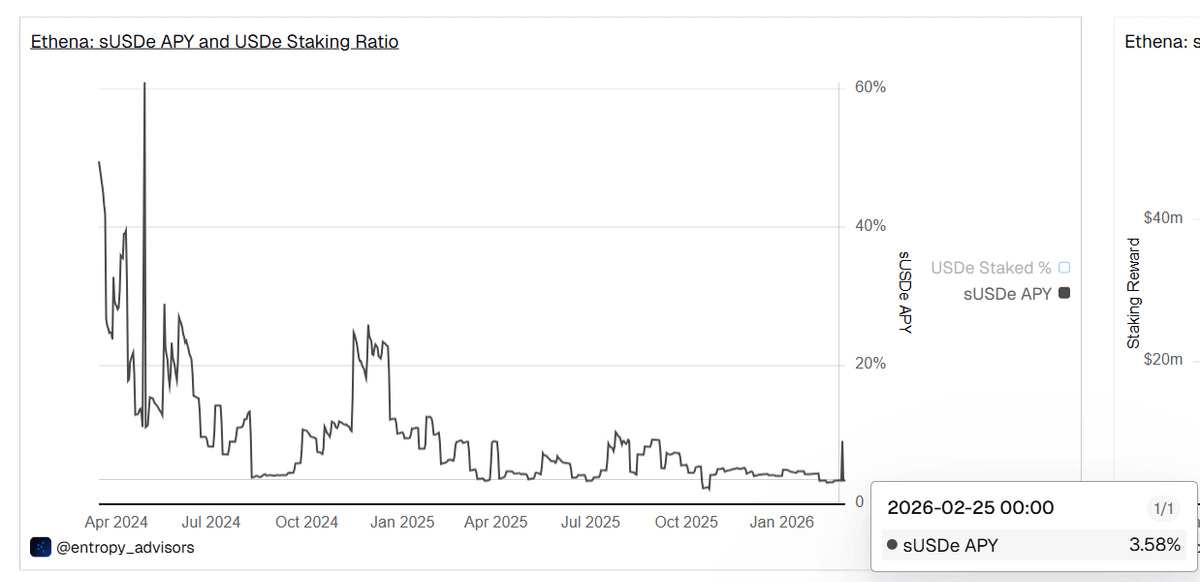
After 10/10, the price of majors and alts came crashing down, points farming activity + speculative TGE activity died down, resulting in declining yields while borrowing cost continue to climb up. This forces users to deleverage and close down their positions to avoid getting liquidated.
The player that’s impacted the most is Pendle — TVL decline by ~70% from $7B to $2B. Pendle relied on unsustainable yields during bull market (points-driven fixed yields opportunities that net 20-40% yields on stables)
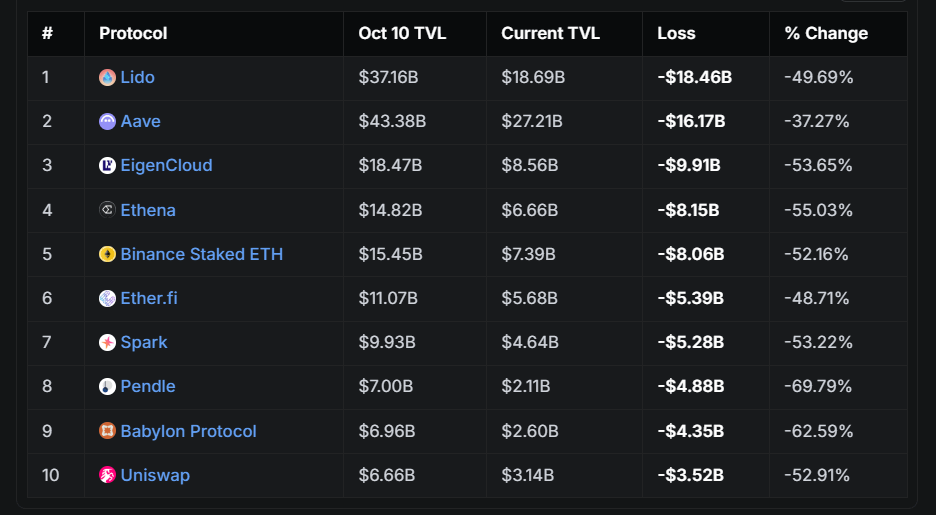
Defi tokens price corrected themselves following the decline in TVL. EIGEN declined the most due to ongoing emissions to operators, lack of comms, PMF, and value accrual to the token holders.
What’s next for Defi?
Offering Defi yields to institutional demand + Capturing RWA yields from T-Bills, money market funds, and tokenized assets.
Multiple Defi teams are gearing their product towards working with institutions. Permissioned Defi pools (KYC/KYB), adding in privacy/confidentiality with selective disclosure, etc.
As tokenized assets move onchain, Defi protocols will be able to derive value from offering superior higher yields on tokenized assets.
2. Perps
Despite perps OI collapsing across different points in time in 2025 (Trump inauguration, his family memecoins dump, 10/10), perps have proven itself to be a highly useful product.
It’s the only venue where traders can trade any assets (crypto, stocks, commodities, forex) 24/7.
When shit happens during the weekend, where do people go to hedge or speculate?
It’s perps, and it’s mostly Hyperliquid these days (with HIP-3).
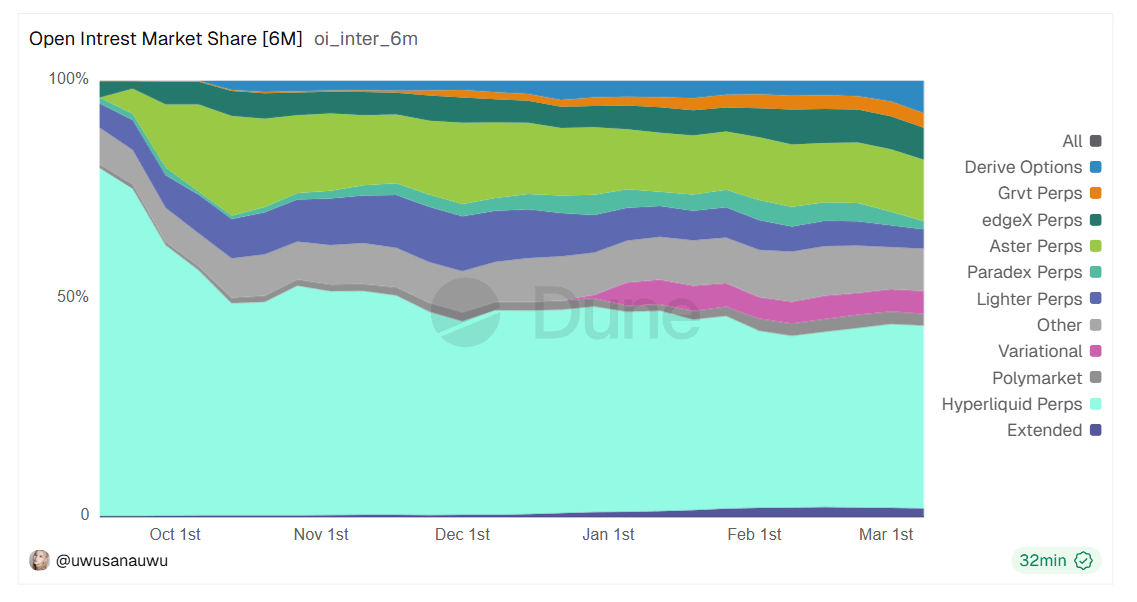
On top of 24/7 access, perps is the #1 venue for RWA adoption. Traditional process takes months to onboard spot tokenized assets, perps fast track that in a span of days.
What’s Next for Perps?
Perpification of everything, more synthetic assets on equities, commodities, forex, oil, interest rates. Always-on, intermediary-free trading.
Better capital efficiency (e.g. Hyperliquid portfolio margin upgrade) — unifies spot + perps under a single portfolio balance. Margin calculated based on the net/overall risk of your entire portfolio, increasing capital efficiency by 30%+
Institutional demand — institutions use perps for macro trading/hedging, bringing a source of more stable demand. Instos can also build product around perps (e.g. Tokenized equities/RWAs paired with perps to farm funding rates)
Perps’ maturing into always-on derivatives markets that bridge crypto and traditional capital.
3. RWAs (T-Bills, MMFs, Tokenized Stocks)

RWAs grew from $3.5B to $22.1B in a year — the gain is largely driven by Tokenized Funds (T-bills, Bonds, MMFs), Tokenized Gold & Commodities, and Tokenized Securities.
As speculative points-driven Defi yields died down, RWA yields became much more prominent. Cash-equivalents, low risk yield sources netting 5-10% coupled with Defi composability (lending/borrowing) and leverage looping opportunities, increase the attractiveness of RWAs.
This, coupled with the repricing of commodities (silver, gold, oil) and equities (AI stocks), drastically increase the demand for tokenized assets.
Things you can do now with tokenized assets
Earn 5-50%+ yields by providing AMM liquidity
Earn lending yields, use it as collateral, borrow stablecoin out of it
Earn points (xStocks) while holding/doing Defi with tokenized assets
What’s Next for RWAs?
More pilots from Institutions, equities, treasuries, ETFs, tokenized platforms, banks using RWAs as collateral.
Products extend to Private credit, debts, corporate bonds, trade finance, where risk could be higher but return will also be higher as well.
Since this wave is driven by institutions (BlackRock, SEC, Major Banks) the adoption will accelerate, positioning blockchain as the rail that solves Tradfi inefficiencies
4. Neobank
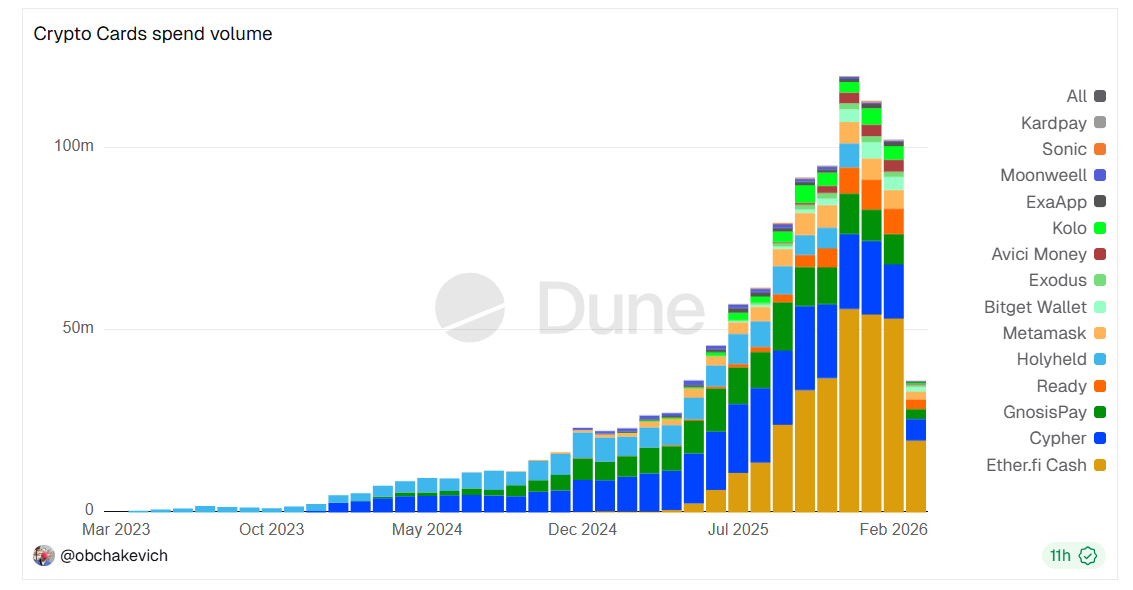
Monthly spend volume of crypto cards (or crypto neobanks) hit ATH of $120M at the end of 2025, up from $23M in Dec 2024. The sector is maturing from niche Web3 experiments to reliable consumer tools, driven by stablecoin utility and regulatory progress.
EtherFi successfully pivoted out of the EigenLayer’s Liquid Restaking Token (LRT) narrative and emerged as one of the top crypto neobank players. EtherFi cards are widely popular thanks to 2 things — high yields on assets (ETH, stablecoins) + borrow mode where ETH can be used as collateral to borrow stablecoin and pay.
Crypto neobanks right now don’t have much differentiation, most act as frontends for Visa/Mastercard and bank issuers — risks, policy depends on the bank that issues the cards. For now use cases are earning yields while spending IRL.
In the near future, these neobanks will differentiate via licenses, actually issuing their own cards + connecting crypto with traditional banking systems. Seamless on/off-ramp, spend, transfer anywhere (i.e. seamless tradfi to defi movement of capital)
What’s Next for Neobanks?
Wider adoption of crypto/stablecoin payments, payment service providers, Web2 neobanks, and general banks offer crypto services.
Cards shift to embedded finance, becoming a part of fintech superapps and general apps, allowing anyone to freely spend & use crypto IRL & within applications.